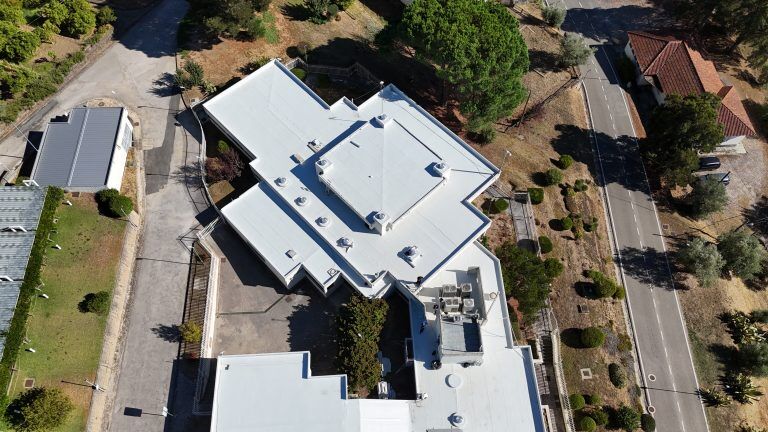
The role of waterproofing in building energy certification and sustainability
For many years, waterproofing was seen as an “invisible” element of construction. It only gained importance when leaks, damp or structural damage appeared. But that reality has changed.
Today, waterproofing plays a strategic role in energy efficiency, building durability and the achievement of the sustainability goals that are transforming the construction sector.
At a time when energy costs remain high, regulatory requirements are increasing, and investors, companies and property owners are looking for more efficient buildings, every detail of the building envelope makes a difference.
And it all begins… with the roof.
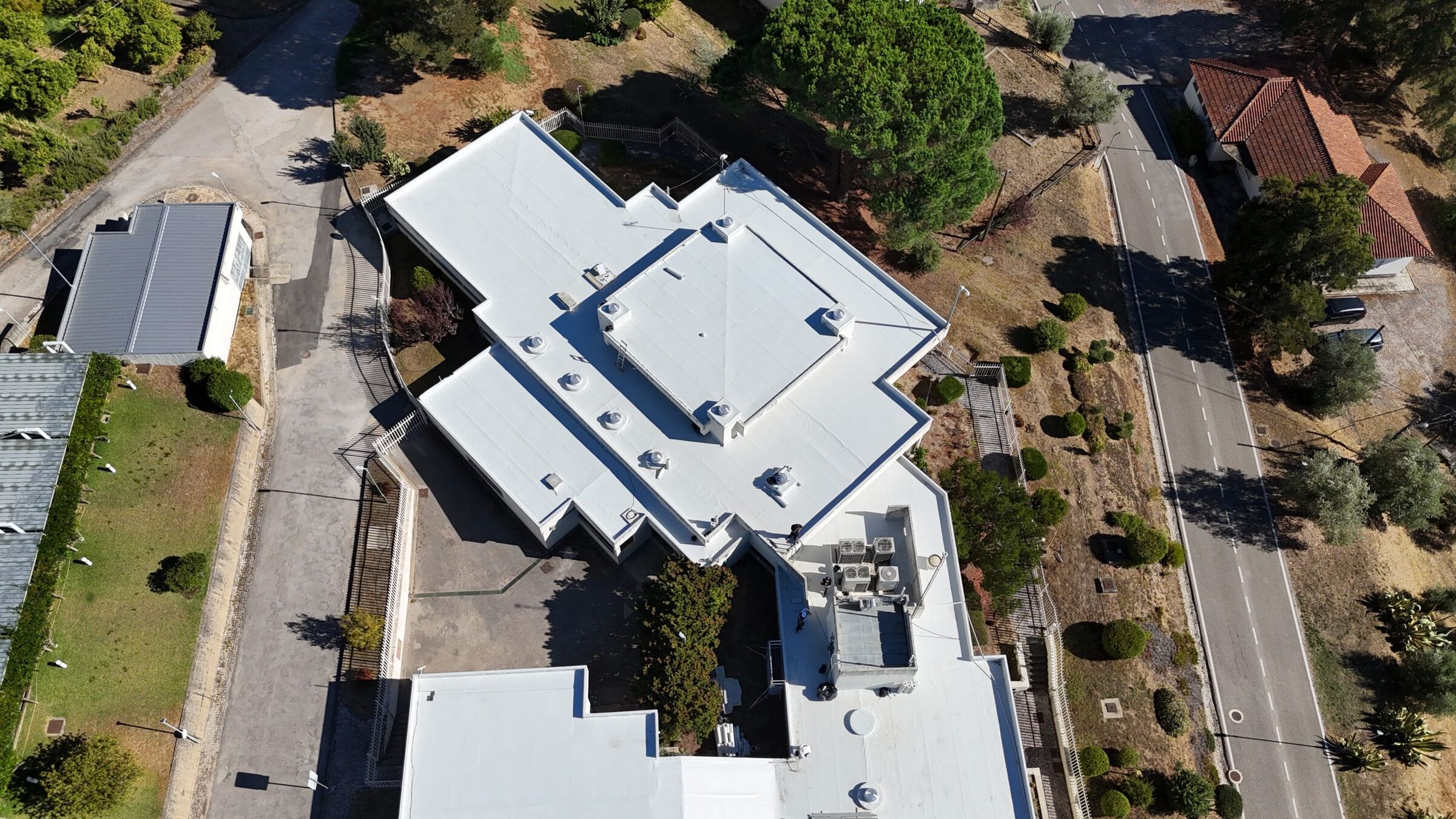
A roof may be wasting more energy than you think
Imagine a building that appears to be in excellent condition. The interior is comfortable, the equipment is modern, and energy consumption seems to be under control. However, there is an invisible problem: the roof has a deteriorated waterproofing system or compromised insulation.
For months, or even years, nothing appears to happen.
Then heat begins to enter more easily during the summer, the energy required to cool the building increases, the insulation loses effectiveness due to moisture, and the first signs of deterioration become visible.
The problem did not appear overnight. It developed gradually.
This is precisely why waterproofing is no longer regarded simply as protection against leaks. Today, it plays a fundamental role in the durability and sustainability of buildings.
What connects waterproofing to energy certification?
Of all the elements that make up a building envelope, the roof is one of the areas most exposed to weather conditions.
Throughout the year, it is subjected to solar radiation, rain, wind, temperature fluctuations and sudden changes in temperature, all of which accelerate the ageing of materials. It is also through this surface that a significant proportion of heat exchange between the interior and exterior takes place.
When the roof no longer performs its function correctly, the impact becomes clear:
- The building requires more energy to maintain a comfortable indoor temperature;
- HVAC systems operate for longer periods;
- Operating costs increase;
- Energy efficiency decreases.
In addition, if water reaches the thermal insulation, its performance can be significantly reduced, further compromising the building’s energy efficiency.
A roof should therefore not be viewed merely as a barrier against rain. It should function as an integrated system in which waterproofing and insulation work together to protect the building for decades.

Reflective roofs: a smart solution for reducing energy consumption
As buildings face increasingly high temperatures and more frequent heatwaves, the way a roof reacts to solar radiation has become a decisive factor in energy efficiency.
It is in this context that so-called “cool roofs”, or reflective roofs, have gained prominence in construction and refurbishment projects across Europe.
Unlike traditional roofs, which absorb large amounts of heat, these solutions are designed to reflect a high percentage of solar radiation, significantly reducing surface temperature. Among the most effective solutions are white TPO membranes, which offer high solar reflectance values.
In practical terms, this delivers very tangible benefits:
- Less heat build-up on the roof;
- Lower indoor temperatures;
- Reduced need for cooling;
- Lower energy consumption;
- Greater thermal comfort for occupants.
In industrial, commercial and logistics buildings with large roof areas, this difference can lead to highly significant energy savings.
Sustainability: much more than saving energy
Today, a sustainable building is not simply one that consumes less energy.
It is also one that:
- Lasts longer;
- Requires less maintenance;
- Reduces the use of raw materials;
- Generates less waste throughout its life cycle.
In this context, waterproofing also plays a decisive role. Whenever a roof suffers from leaks or premature deterioration, it is not only the building’s protection that is at risk. Maintenance costs increase, repairs multiply, and the use of materials and resources grows.
In many cases, minor issues that could have been prevented eventually require major interventions, with a far greater economic and environmental impact.
The importance of choosing the right materials
Not all waterproofing solutions offer the same performance or guarantee the same level of durability.
The choice of materials directly influences the efficiency of the roof, future maintenance costs and the building’s ability to meet the environmental and energy requirements of the years ahead. Rather than simply addressing an immediate need, it is important to select solutions capable of maintaining consistent performance over several decades.
Key factors to consider include resistance to UV radiation, stability under temperature fluctuations, compatibility with insulation systems, ease of maintenance, material recyclability and, naturally, the expected service life of the solution.
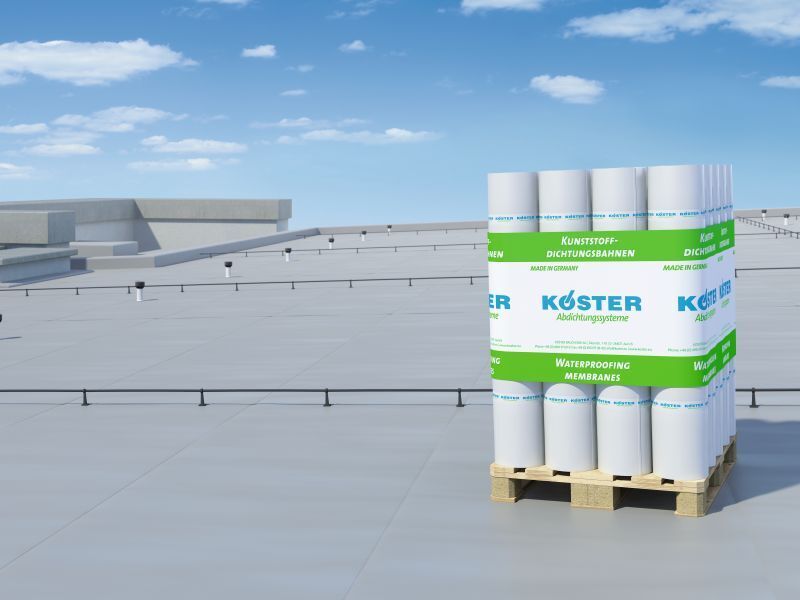
In recent years, TPO membranes have established themselves as one of the leading solutions for roof waterproofing, with Köster TPO membranes standing out among them.
Their high mechanical resistance, excellent performance under UV exposure, and ability to reflect a significant proportion of solar radiation make these membranes a particularly effective solution for improving building energy efficiency.
This is combined with a long service life, reduced maintenance requirements and a lower environmental impact, as many of these membranes are produced using recycled raw materials and can be recycled at the end of their service life.
Building today with the future in mind
The construction sector is undergoing one of its greatest transformations in recent decades.
New energy efficiency and decarbonisation requirements, driven by the European Union’s targets for a more sustainable building stock, are placing the building envelope at the heart of this transformation. Every element of the roof, façade and insulation now plays a decisive role in reducing energy consumption, lowering emissions and increasing the value of property assets.
At the same time, investors, asset managers and companies are looking for more resilient buildings that can offer lower operating costs, greater durability and consistent environmental performance over time. These characteristics are no longer simply a competitive advantage; they have become a genuine decision-making criterion.
In this context, waterproofing is no longer seen as an unavoidable cost, but as a strategic investment.
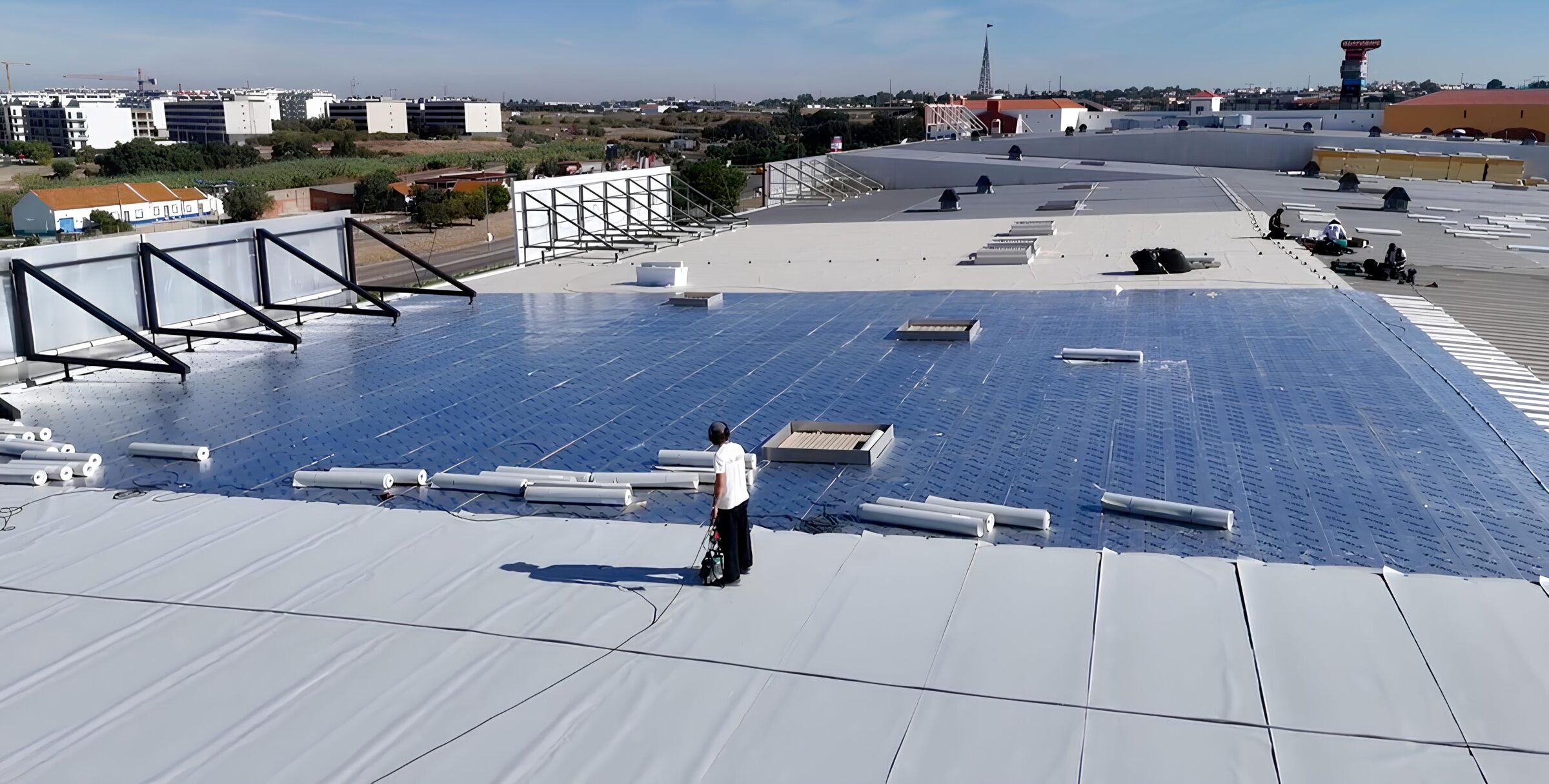
Prudêncio’s vision: protecting buildings, creating value
At Prudêncio, we believe waterproofing should go far beyond its most obvious function.
Protecting a roof also means protecting the building’s energy performance, preserving its durability and contributing to more efficient and sustainable construction.
This is the vision that has guided our work for decades. Every roof represents an opportunity to reduce energy consumption, extend the building’s service life and create value for those who use it.
Because today, protecting a building also means protecting the future.