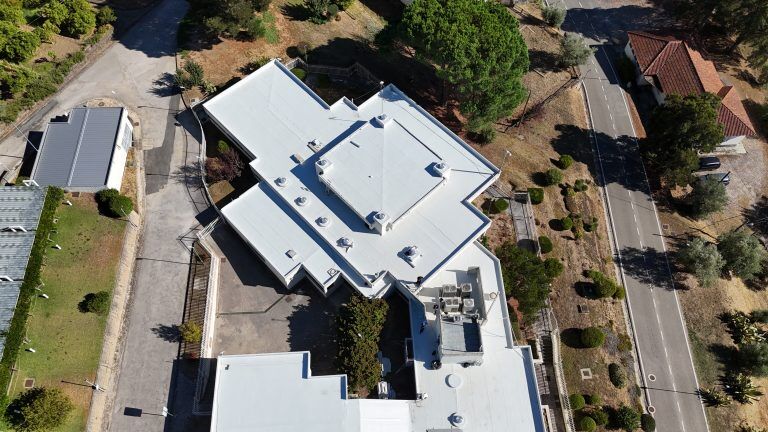
Waterproofing and generating energy: the challenge of the MI3S project
The way we think about buildings is changing. Today, it is no longer enough to waterproof roofs; it is essential to make them more efficient, intelligent, and sustainable.
With buildings accounting for around one-third of global energy consumption, the construction sector faces a clear challenge: reducing environmental impact without compromising performance. It is within this context that the MI3S project emerges – Smart and Sustainable Solar Waterproof Membrane.
Far beyond waterproofing
Traditionally, waterproofing’s main function is to ensure roof watertightness. But what if that same solution could go further?
The MI3S project is built precisely on this premise: creating an integrated system that combines:
- Waterproof membranes with energy generation capacity
- Flexible solar modules
- Sensors for monitoring
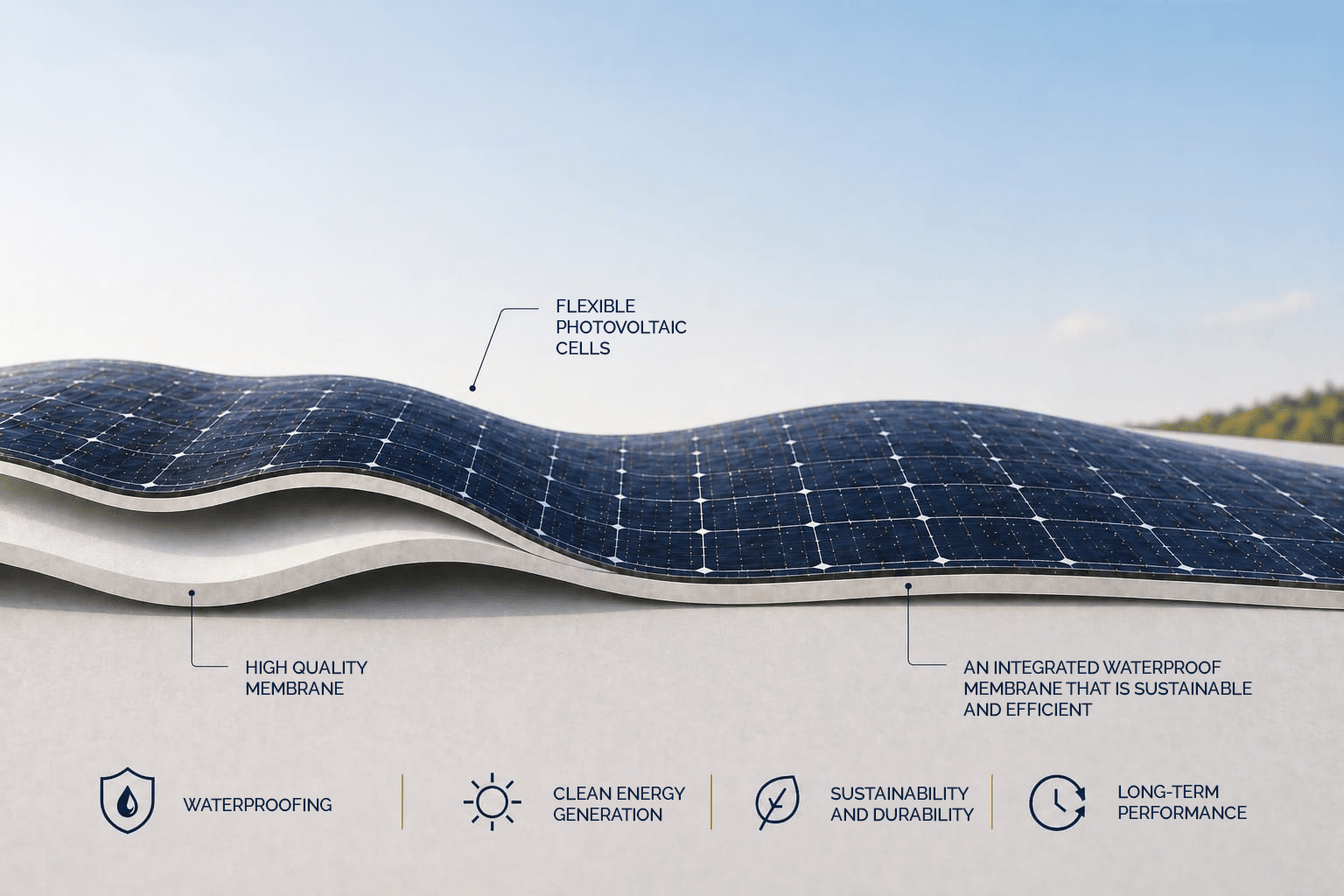
By incorporating flexible photovoltaic modules directly into the waterproof membrane, this approach transforms the roof into an active building element—capable of ensuring watertightness while simultaneously generating energy.
Integrated technology for a new generation of roofs
At the core of this innovation are ultra-thin solar cells based on CIGS technology, enabling a lightweight, flexible solution adaptable to different roof configurations.
The goal is to develop a solution that stands out for:
- Adaptability to different roof typologies and configurations
- High functional performance
- Integration into the construction system
- High energy efficiency potential

From research to real-world application
Over 36 months, the project develops through several phases, from the study of existing solutions to validation in real-world environments.
Key activities include:
- State-of-the-art analysis, benchmarking, and material selection
- Development of flexible solar modules
- Integration of different components into a functional system
- Development of sensors for continuous monitoring
- Prototyping and technical, economic, and environmental validation
- Dissemination of results and technology transfer to the market
This process aims to ensure that the final solution combines innovation, feasibility, and real-world applicability.
Monitoring sensors: more control and durability
One of the differentiating elements of the MI3S is the development of integrated sensors capable of monitoring parameters relevant to system performance.
These sensors allow tracking the status and evolution of the modules over time, anticipating maintenance needs, and contributing to more consistent operation throughout the system’s lifespan.
A joint effort to innovate in construction
MI3S results from a multidisciplinary consortium bringing together scientific and business entities:
- Prudêncio Impermeabilizações
- CeNTI
- INL
- ISEP
This collaboration combines technical expertise, scientific research, and practical experience in real construction environments.
The project is co-funded by the Northern Regional Program (Norte 2030), within the framework of support for research, development, and innovation.

A new perspective on roofs
The MI3S project was created to meet current construction demands, where energy efficiency, sustainability, and durability are increasingly critical.
More than just protective and waterproofing elements, roofs must take on an active role in the energy performance of buildings.
In a constantly evolving sector, integrated solutions like this reinforce the potential of innovation to unite function, efficiency, and sustainability in a single system.
Learn more about this research project.