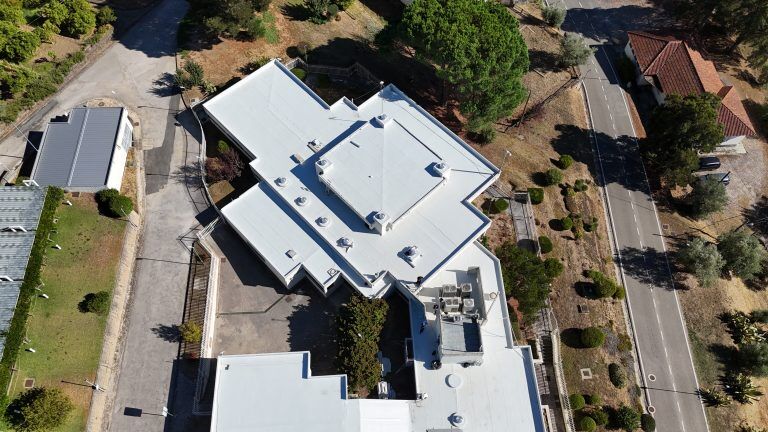
Works without interruptions: how to execute refurbishment projects in operational buildings
Refurbishing a roof is, in itself, a technically demanding process. But when the building remains in operation, that challenge takes on a whole new dimension.
Spaces such as shopping centres, industrial units, office buildings, hospitals or schools cannot suspend their activity for the works to take place. Daily operations must continue safely, with organisation and minimal disruption.
It is precisely in this context that rigorous planning, on-site experience, and a well-structured methodology shift from being a detail to becoming critical factors.
What is really at stake?
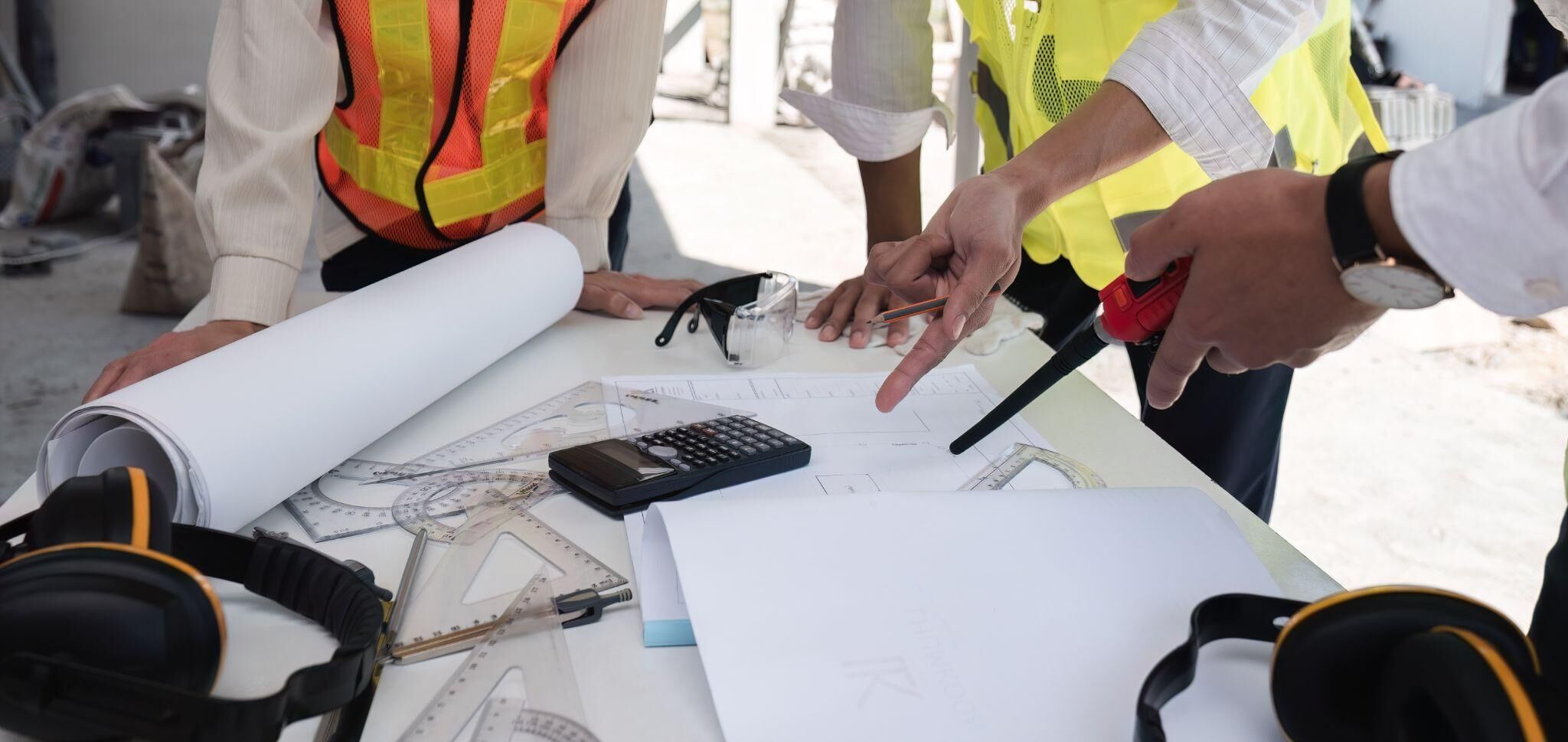
When the building cannot stop, refurbishment and waterproofing require strict planning and full control. This means:
- Safeguarding critical equipment
- Preventing leaks throughout the execution phase
- Ensuring the safety of staff and users
- Minimising disruption, while maintaining production or service continuity
- Delivering on time, without compromising performance
A leak during execution can cause immediate damage. A flaw in logistical planning can delay critical phases of the project. A delay can compromise entire operations.
That is why every technical decision, from the application method to the choice of materials, must be carefully and critically considered.
The importance of strategic planning
Before any intervention begins, it is essential to assess the condition of the existing system and the building’s structural capacity, identifying the most critical areas.
In a metal roof, for example, there may be deformations, weakened fixings, or localised corrosion points that need to be addressed and reinforced before applying the refurbishment system.
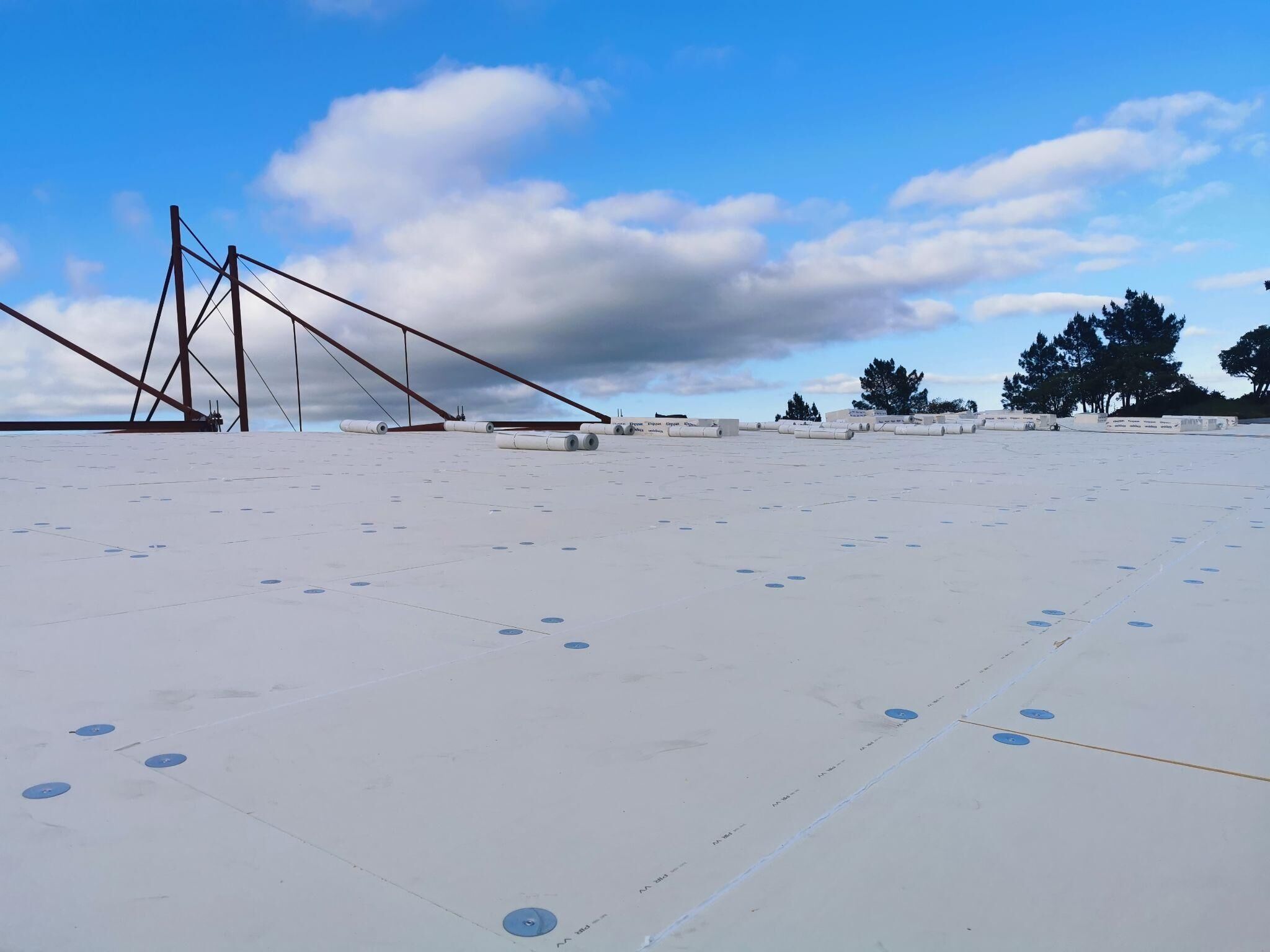
Each project has its own particularities. It is not always possible to anticipate every challenge, but careful and well-structured planning helps minimise risks, meet deadlines, and avoid surprises throughout the process.
This preparation includes:
- Clear definition of intervention phases
- Scheduling adapted to the client’s operations
- Identification of critical areas
- Logistical planning of access and material handling
- Continuous monitoring of weather conditions
Another critical aspect is the early preparation of specific materials. Colaminated edge profiles, custom-moulded components, or fixings adapted to the existing substrate must be defined and produced in advance. In an operational building, logistical delays translate directly into operational risks.
Safety first
Roof refurbishment involves working at height and often on existing structures with specific characteristics.
Certified lifelines, collective protection systems, access control, and continuous team training are essential. But there is something equally important: a culture of prevention.
When works take place while the building remains active, it is crucial to ensure that everyone (technicians, client staff, and users) is protected. This makes coordination between teams and constant communication an integral part of the process.
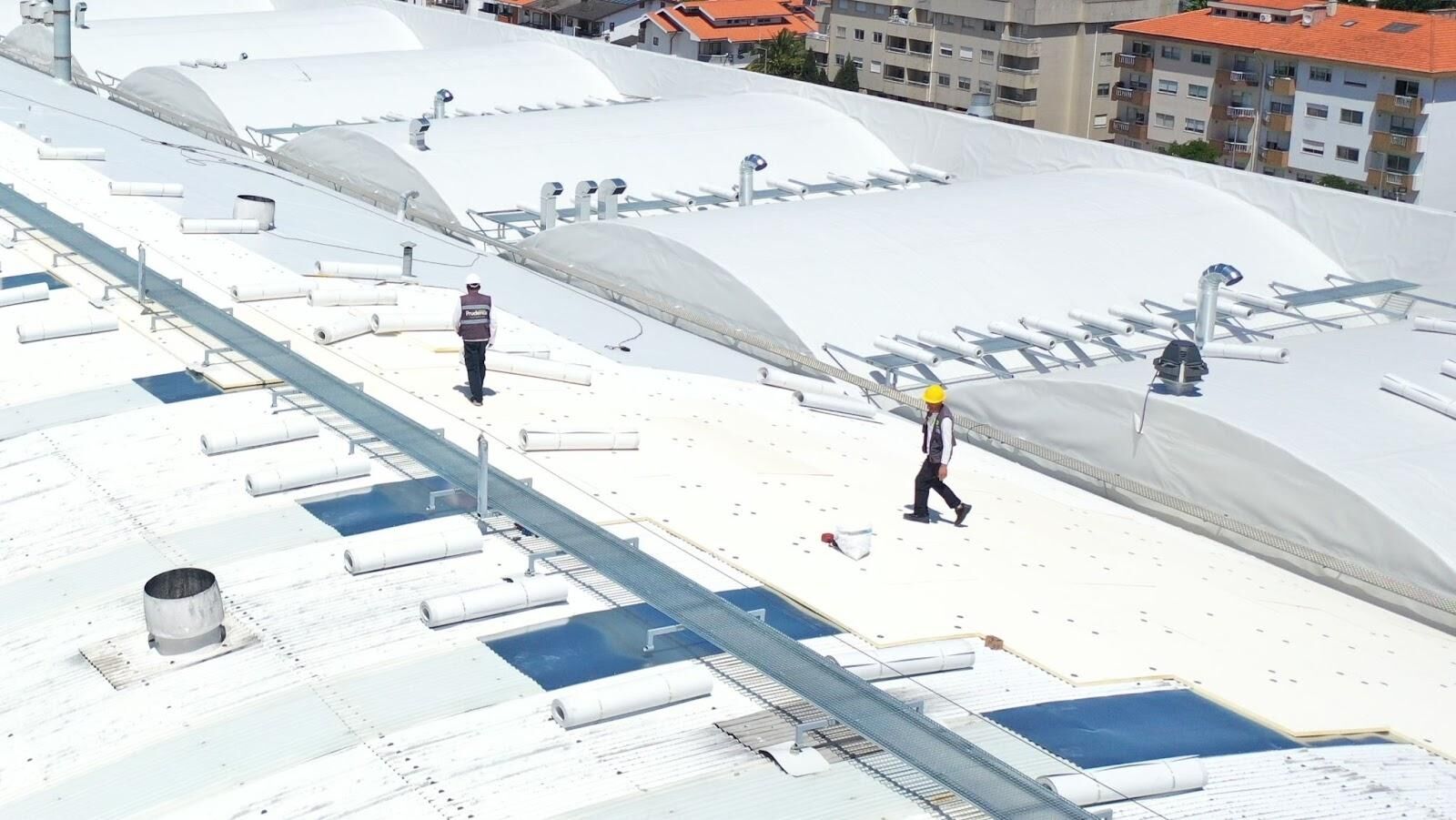
Did you know that not all refurbishment systems are suitable for uninterrupted interventions?
The technical solution must be compatible with the existing substrate, have controlled weight, and allow efficient application without excessive noise or invasive work that disrupts operations.
TPO membrane systems ensure system continuity, high durability, and simplified maintenance, essential factors for buildings with intensive use. Bonded systems, for example, reduce the need for structural perforation and minimise vibrations.
A well-founded technical decision does more than solve the immediate problem: it protects the investment in the long term and reduces the likelihood of future interventions.
A real example: Mediapro
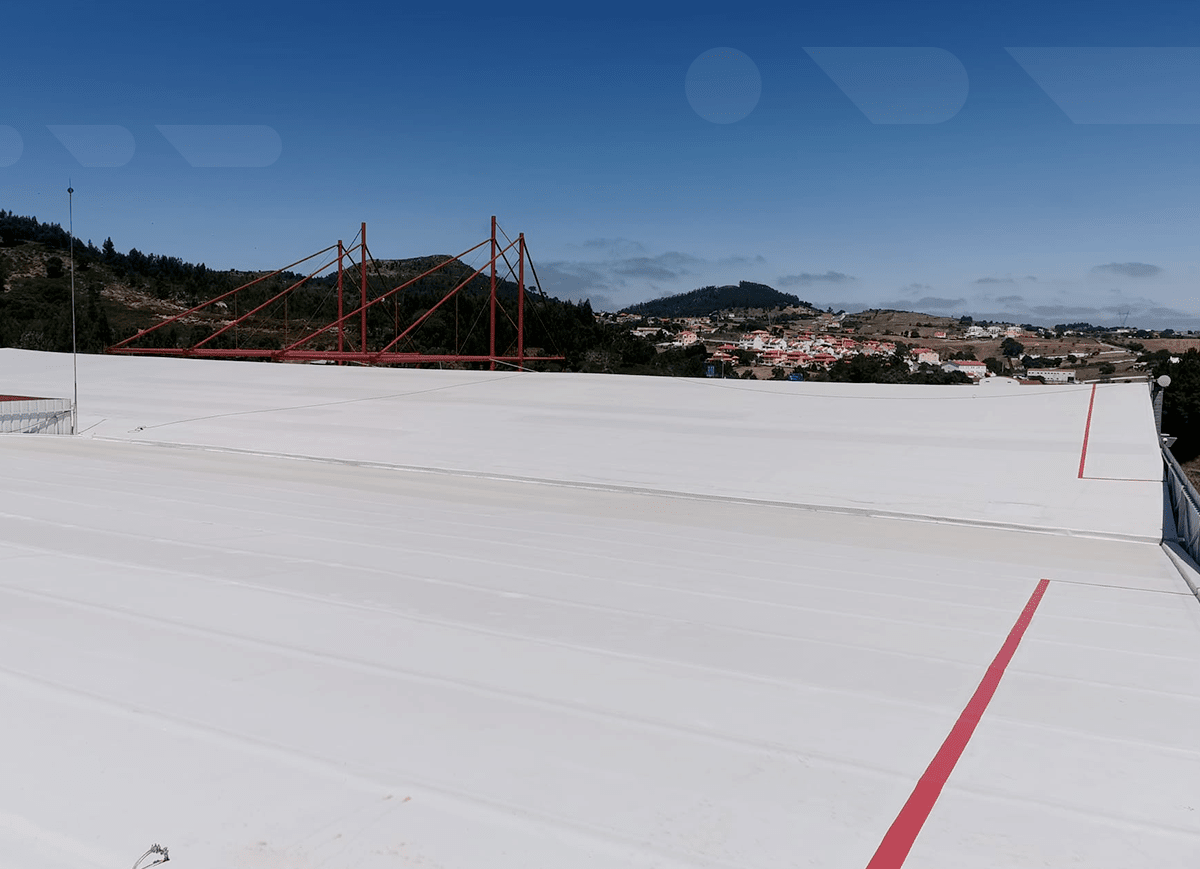
One of the best examples of a refurbishment project carried out without impact was the Mediapro project.
In this case, there was a non-negotiable requirement: operations could not be interrupted. The recording of programmes such as “Cristina ComVida”, “5 Para a Meia Noite”, and other productions had to continue normally throughout the intervention.
To achieve this, it was essential to ensure:
- A refurbishment system that does not require removal of the existing roof
- A lightweight solution, suitable for a roof that regularly supports lighting systems and heavy technical equipment
The technical response involved applying a lightweight thermal insulation and waterproofing system, designed to ensure performance with minimal additional load. But beyond the solution itself, rigorous planning and constant coordination between teams were equally decisive.
The result? A renewed roof, with high thermal performance and guaranteed watertightness, while Mediapro’s operations continued without any interruption.
Learn more about the approach and solutions that made this project possible.
Why choose Prudêncio?
Over more than five decades, we have developed and refined methodologies for working in operational buildings. Our accumulated experience allows us to anticipate risks, structure phased interventions, and maintain strict control over the entire process.
What sets us apart:
- Rigorous technical planning before the start of the project
- Early preparation of specific materials and tailored solutions
- Fast response capability, with phased execution options
- Strict risk and safety control
- Strong technical partnerships, such as with KÖSTER
More than executing a project, the goal is clear: to ensure the building continues to operate normally, while being prepared to meet future challenges.

Refurbishment without stopping is possible
Postponing an intervention due to fear of disruption can turn a manageable situation into a more serious and costly problem. With the right partner, refurbishment stops being a risk and becomes a planned, safe, and technically sound process.
Request your quote today and discover how we can execute your project with minimal operational impact.